Many stories about Krushna can appear puzzling or even controversial when viewed through moral frameworks. Traditional time-tested teachings, however, invite us to look deeper and understand these narratives from a spiritual perspective.
Lying is described as speech that is not bhu:tha-hitha pro:ktham — that which does not benefit the listener and those affected. In these teachings, Krushna’s words are understood as sathyam: speech that ultimately serves the welfare of beings.
Stealing is defined as taking what belongs to someone else. From a theological standpoint, all creation ultimately belongs to the Supreme. In that sense, nothing exists that is outside His ownership.
Adultery is understood as a violation of the human code of bramhacharyam. Scripture presents Krushna as the Supreme Being who operates beyond human limitations and changing social codes. His actions are therefore interpreted as expressions of divine purpose rather than human behaviour.
The unwise deride Me when I assume a human form, not understanding My supreme nature as the Supreme Lord of all beings.
Sa:sthras often describe certain practices as harmful for human beings because lack of discipline dilutes a steady and takes away one’s focus from life’s goals. At the same time, human beings naturally feel drawn toward what is dramatic, forbidden, or emotionally intense. Even today, negative events tend to receive more attention than quiet acts of goodness and service.
Traditional teachings explain that what is right or wrong for human beings cannot be applied in the same way to the Divine. The actions of Lord Krushna are understood as serving a higher purpose that only He can accomplish.
Across incarnations — whether as Krushna, Ra:ma, or Va:mana — the central purpose is described as sa:dhu-parithra:na:m: offering divine protection to seekers and to all who are connected to them. The Krushna avatha:ram is viewed as unique because divine power is said to have been expressed throughout His life in visible and extraordinary ways.
His birth itself is described as divine.
He freed His parents from shackles immediately after being born in prison.
As an infant, He defeated Pu:thana, who attempted to poison Him.
Soon after, He destroyed Saka:ta:sura by merely touching a cart with His feet. He overcame the whirlwind demon Thrunavruththa. He revealed the universe within His mouth to His mother. He demonstrated that He could not be bound by a rope, symbolising that the Divine cannot be experienced by human effort alone.
The list goes on and on!
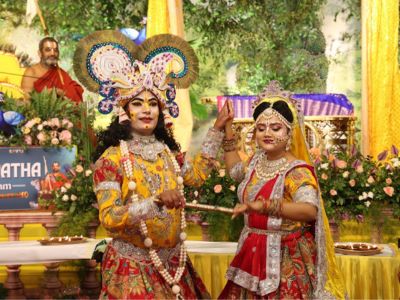
Stories also describe His interactions with the go:pika:s, interpreted as acts meant to correct, guide, and spiritually uplift devotees. Devotional literature explains that Krushnaprepared devotees for mukthi by removing the effects of karmaand prakruthi. His presence and grace are viewed as the means that clear their path to liberation or grant them their desire to serve Him in the ways they desire.
In devotional understanding, Krushna’s purpose was to protect the go:pa:s and go:pika:s — the sa:dhu:s. Rakshanam(divine protection) is described as both fulfilling the devotee’s deepest longing and removing the obstacles that stand in the way. He chose to act in the ways that achieve this objective.
What do the sa:dhu:s ultimately seek? They seek Him alone.
These leela:s — divine acts with meanings deeper than their surface narratives — are understood as expressions of His supreme and compassionate nature. He is revered, worshipped, loved for His qualties and for granting the great message to human kind in the form of Bhagavad Gi:tha.
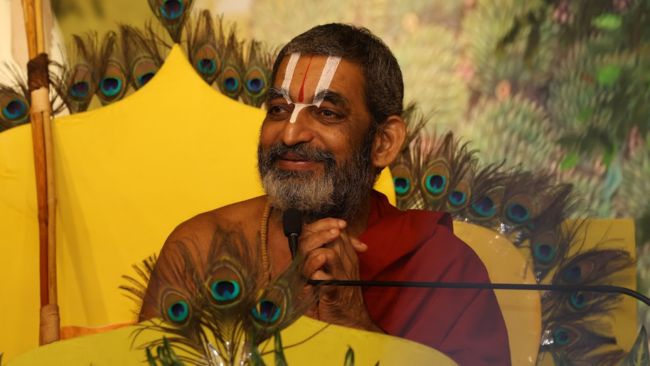
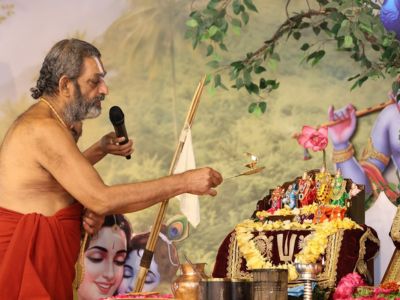
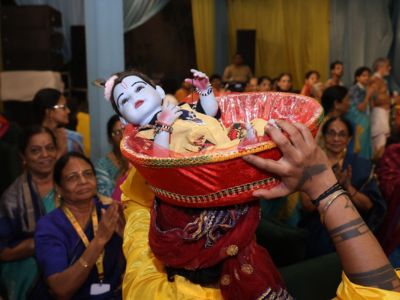
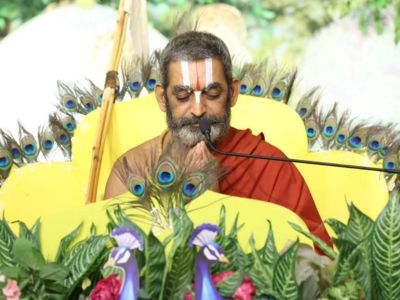
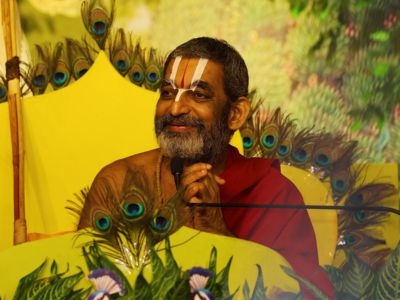
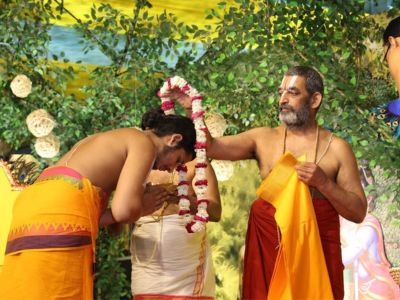
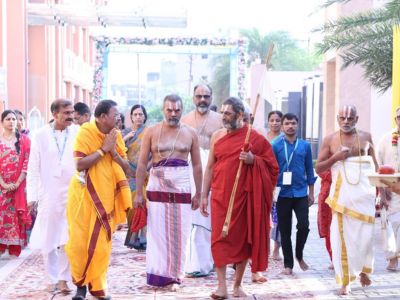
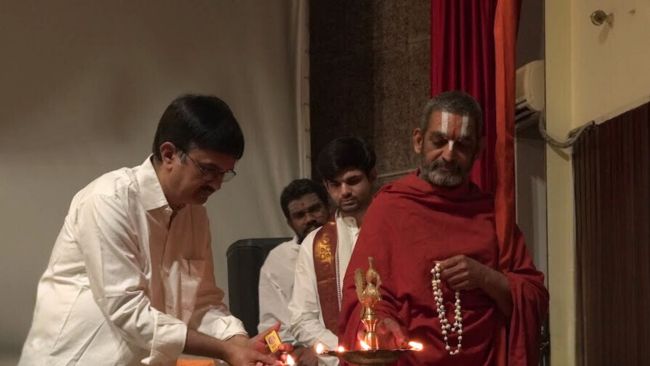
– From the teachings of HH Chinna Jeeyar Swamiji – Bhagavatha Sapthaham, Vrindavan – 2nd Apr to 8th Apr 2026





జై శ్రీమన్నారాయణ 🙏
జై శ్రీమన్నారాయణ అడియెన్ రామానుజ దాసిని అస్మత్ గురుభ్యోన్నమః🙇♀️