
What Is Your Role?
From small households and multibillion-dollar firms to the world’s largest economies, every organised entity—big or small, public or private—is run by people playing different roles within an established framework.
Technology may reshape how these roles are performed, but roles still come with responsibilities and accountability.
What about the larger framework within which we all operate? If the Supreme governs this universal framework, what is our role within it?
Back in Treta Yuga, when Bharatha was asked to rule the kingdom while Sri Rama was in exile, his response captured a profound understanding:
ra:jyam cha aham cha ra:masya
“The kingdom and I both belong to Rama.”
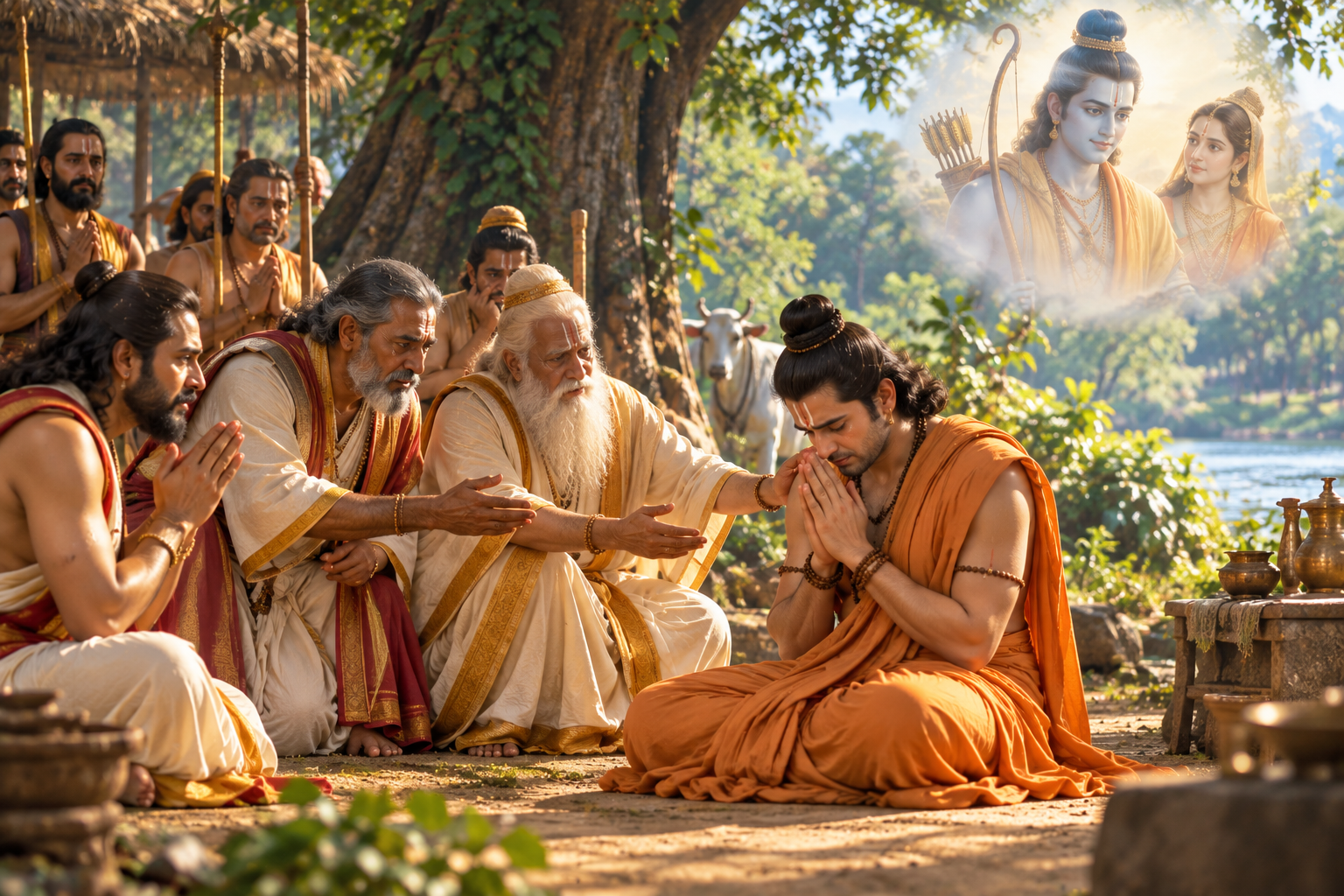
If Bharatha belonged to Rama and the kingdom belonged to Rama, how could one belonging consider itself the ultimate owner of the other?
This did not mean Bharatha had no role to perform. The kingdom still had to be governed. The difference was in the understanding with which the role was performed.
The role is real. The responsibility is real. What must not be mistaken is the ownership.
Generations later, we see the same understanding in Kulasekhara Alwar, who was himself a king, and in the royal lineage associated with him. The rulers of Travancore saw themselves as Padmanabha Dasas—servants of Sri Anantha Padmanabha Swami.
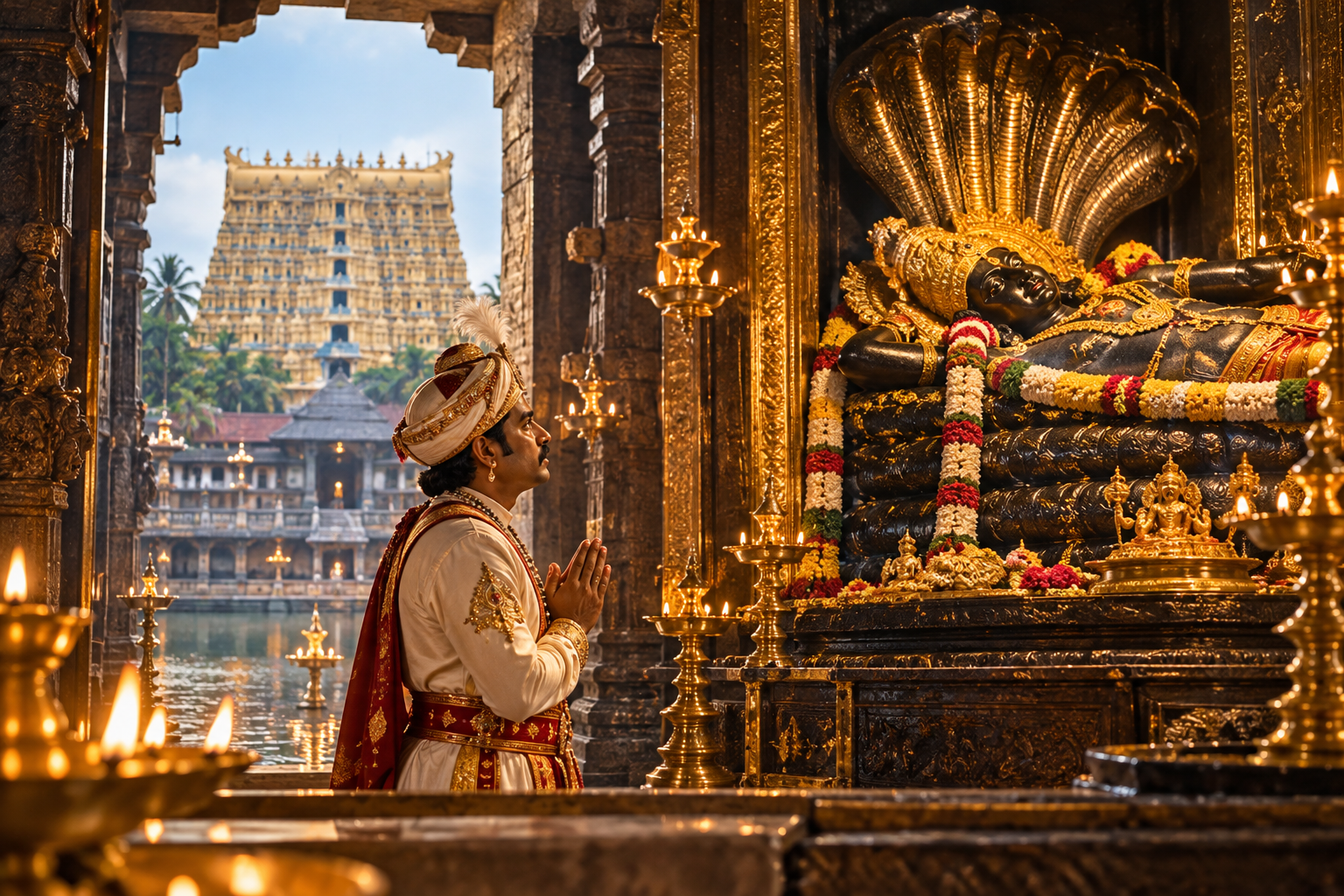
Even in recent history, this understanding continued. The Supreme Court of India, in its 2020 judgment concerning the Sri Padmanabhaswamy Temple, records the Travancore royal family’s longstanding understanding that the rulers were servants of Sri Padmanabha. Sci API
Supreme Court judgment: Sri Marthanda Varma (D) Thr. LRs. & Anr. v. State of Kerala & Ors. — 13 July 2020
The king remained king. He governed, made decisions and carried the responsibilities of the throne, but never lost sight of who the true owner was.
Closer to our own times, we see this understanding reflected in the life of late Sri Bhashyam Appalacharya Swami, the renowned scholar whose Telugu translation of the Thiruppavai Vya:khya:nam many of us have read. He regularly performed the Anantha Padmanabha Swami Vrat. His life too reflected this understanding of belonging to the Lord and living in His service.
Nammalvar, while singing about the Lord of Ananthapuram, addresses Him as Kesava:
ke:dum idar a:ya ella:m ke:sava: enna na:lum…
Swamiji explains Kesava here as the Lord of Ka, Brahma, and I:sha, Siva.
In another pa:suram in the same decad, Nammalvar says:
kadaiththalai si:ykkap petra:l
kadu vinai kalaiyala:me:
He speaks of the fortune of getting even the opportunity to sweep at the entrance of the Lord at Ananthapuram.
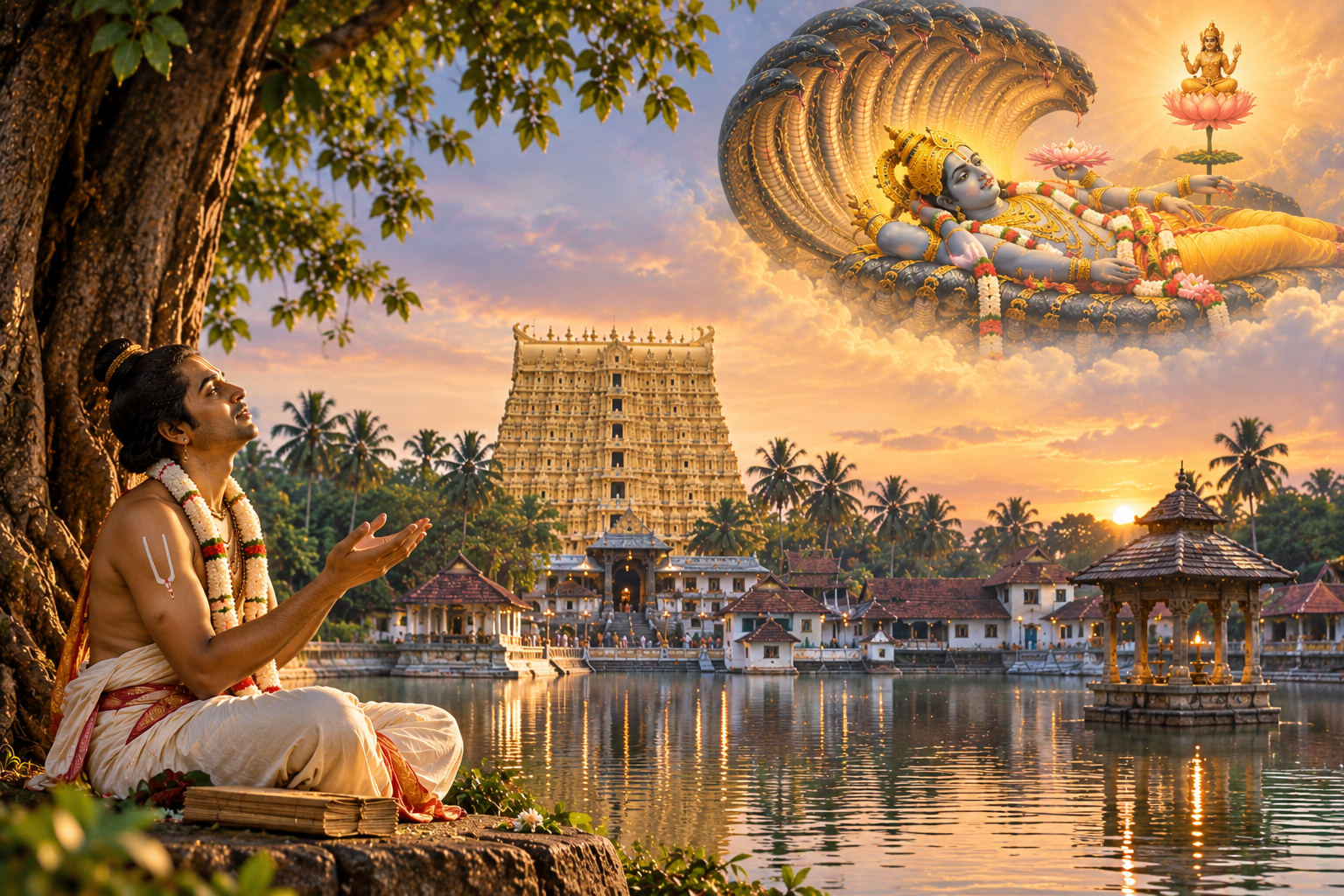
What greater illustration could there be of our role?
Across these examples, separated by generations and vastly different circumstances, the principle remains the same.
Our roles may change. Our responsibilities, authority and influence may grow enormously. One may be responsible for a household, an organisation, thousands of people or even an entire kingdom. But the ultimate ownership does not change.
Recognising the true owner does not reduce our responsibility. It defines how we perform it.
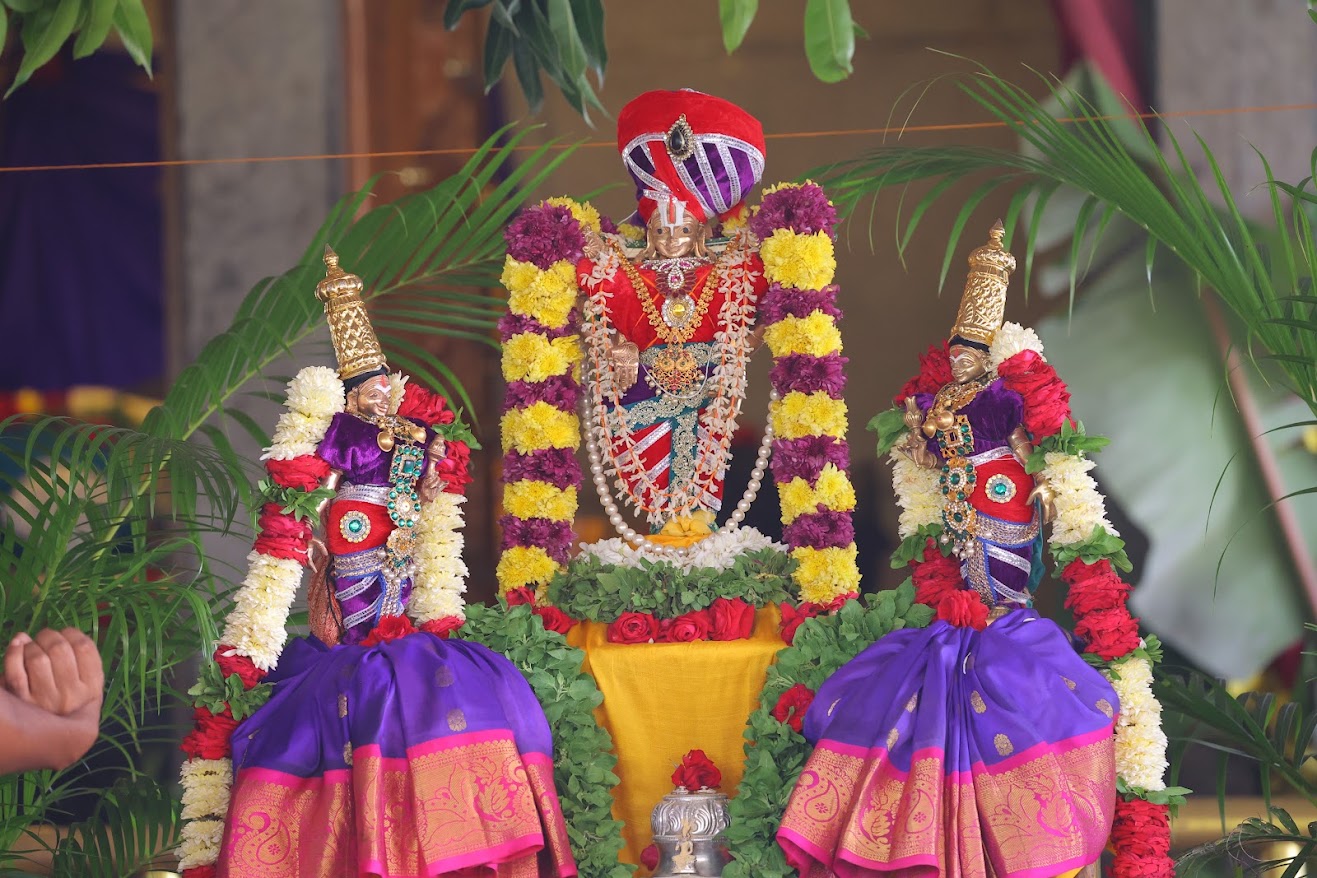
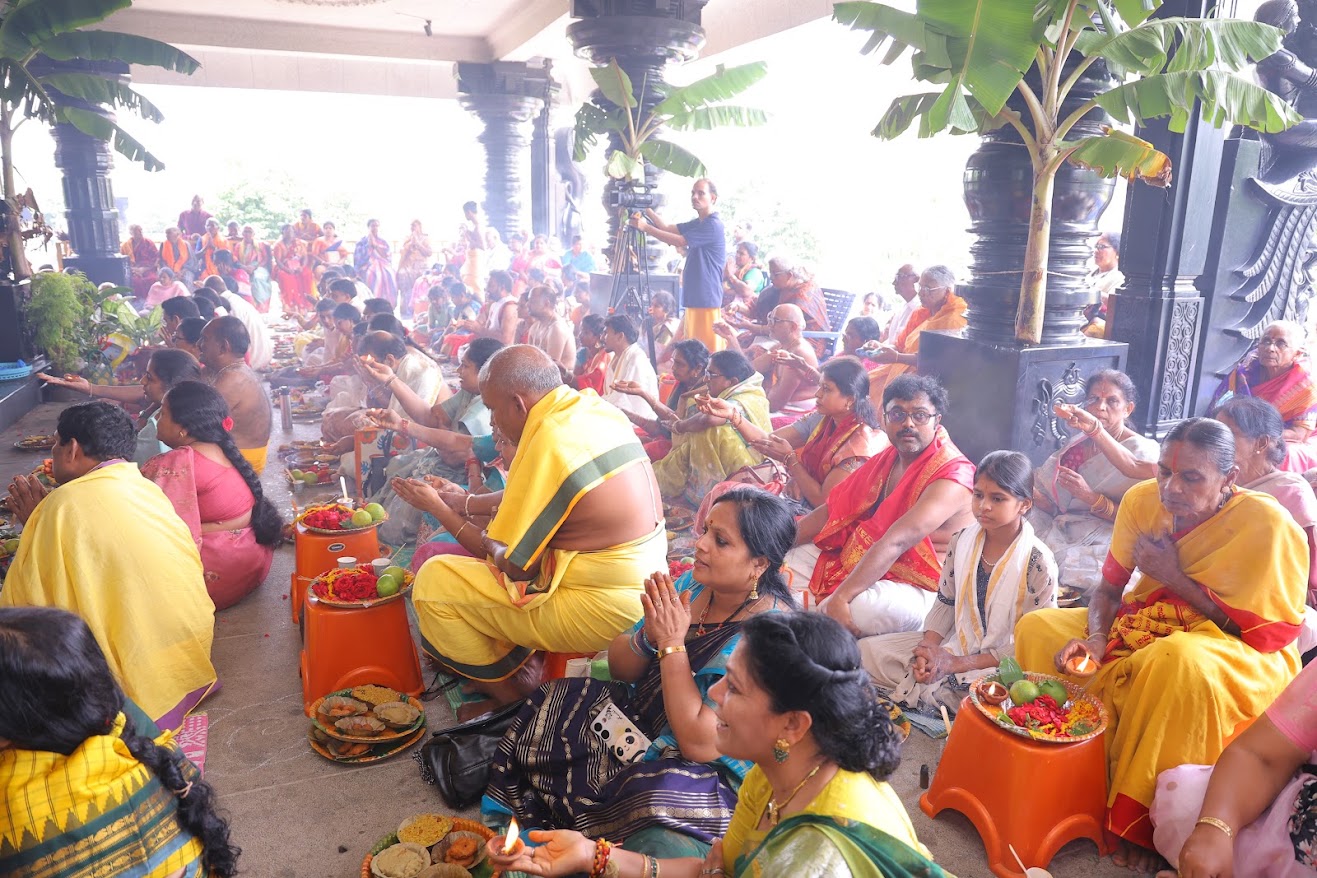
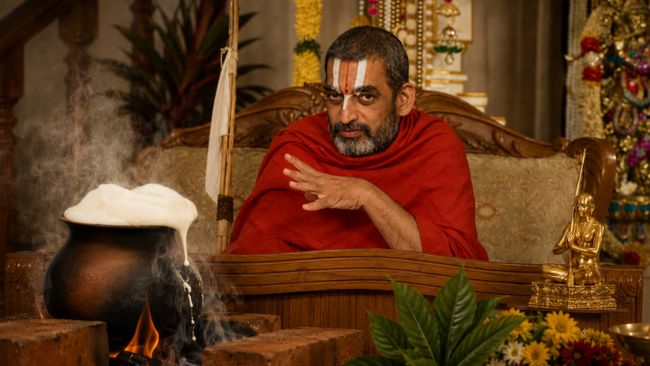
The Anantha Padmanabha Swami Vrat being conducted today at the Statue of Equality is an opportunity for us to understand this truth more deeply.
Whatever our role, we perform it fully, remembering that both we and what has been entrusted to us belong to the Lord.
We are here as the Lord’s tools—to do the work He has entrusted to us, and to perform that work as service to Him.
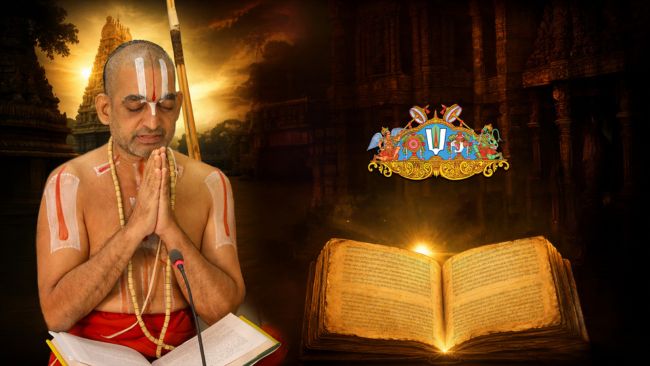
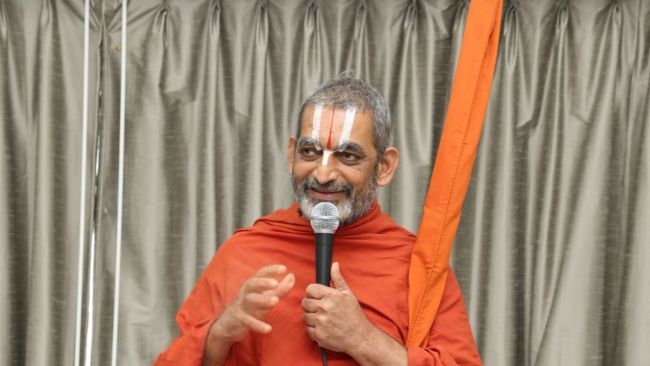
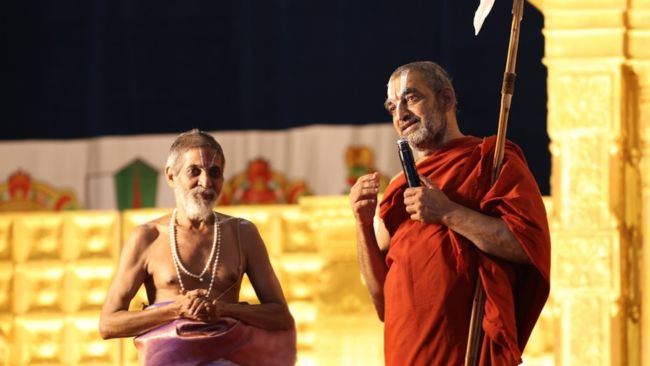
– From the discourse of HH Chinna Jeeyar Swamiji
– 25th Sep 2026,
-Sri Anantha Padmanabha Swami temple
– Statue of Equality
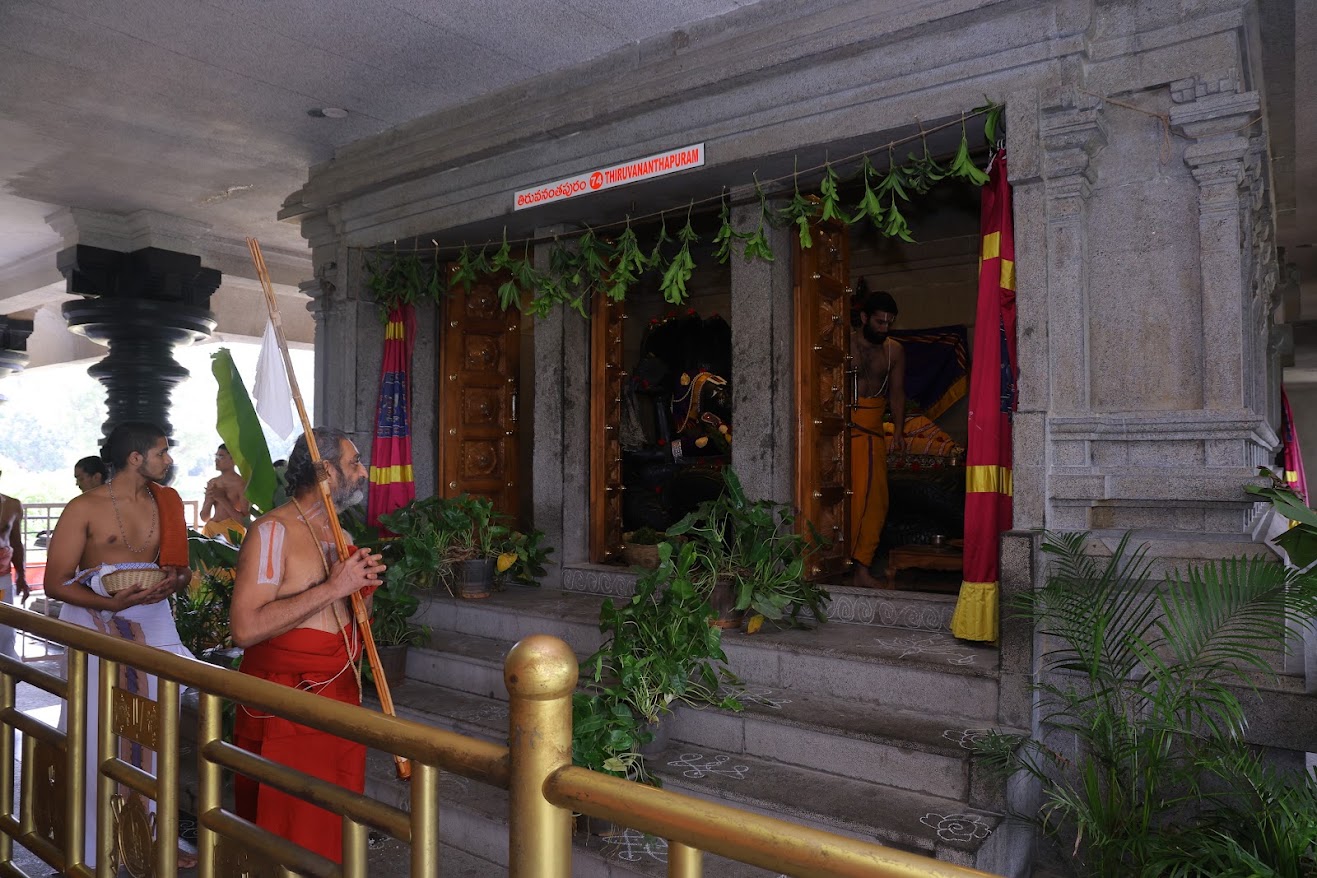
The Sri Anantha Padmanabha Swami Divya Desam at the Statue of Equality shares a special relationship with the Sri Anantha Padmanabha Swami Divya Desam in Thiruvananthapuram. The same relationship was established for all the Divya Desams at the Statue of Equality.
When the 108 (106 in India and two in the celestial realm) Divya Desams at the Statue of Equality were being established, mrutthika was brought from the respective Divya Desams and used in the construction here.
A sa:lagramam that had been receiving abhishekam at each of the 106 Divya Desams in India was also brought and placed in its corresponding Divya Desam at the Statue of Equality. In this way, a direct connection was established with the Lord being worshipped there.
In return, five or six sa:lagramams brought from the sacred Gandaki River in Nepal were offered to each of those Divya Desams.
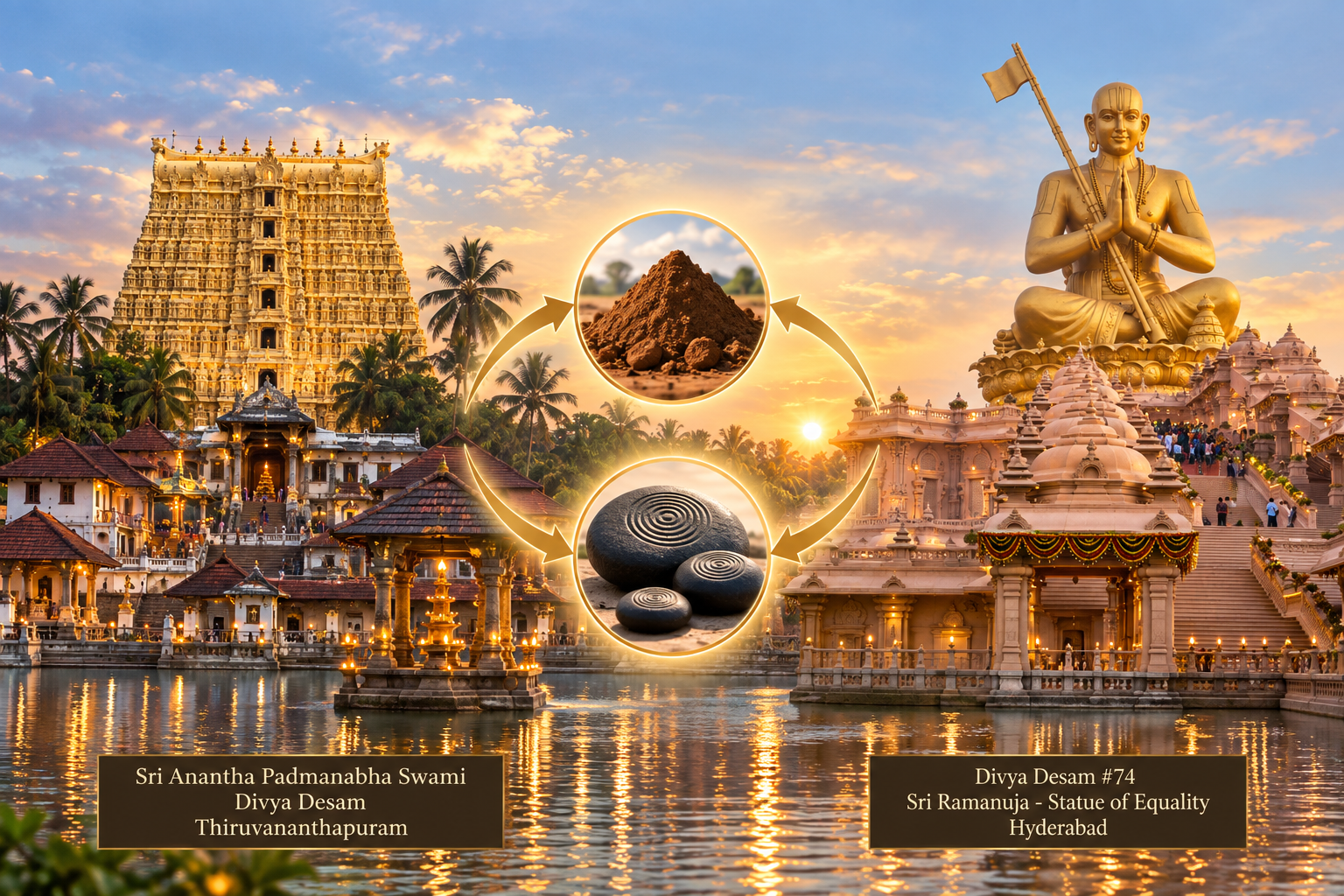
The prayer behind this relationship was that the Lord there would receive the services offered here with the same joy with which He receives the services offered there.
This interconnectedness holds true across all the Divya Desams at the Statue of Equality.
Today, as we perform the Anantha Padmanabha Swami Vrat in the premises of Sri Anantha Padmanabha Swami Divya Desam at the Statue of Equality, we have an opportunity to remember and cherish this beautiful divine relationship between the two centres.