
Is God Forgiving or Fair?
A mother cow cannot bear to see her newborn calf covered in the dirt and impurities of birth. She lovingly cleans the calf herself. She does not wait for anyone else to do it. In fact, if anyone attempts to intervene, she drives them away. Her own affection compels her to clean the calf herself.
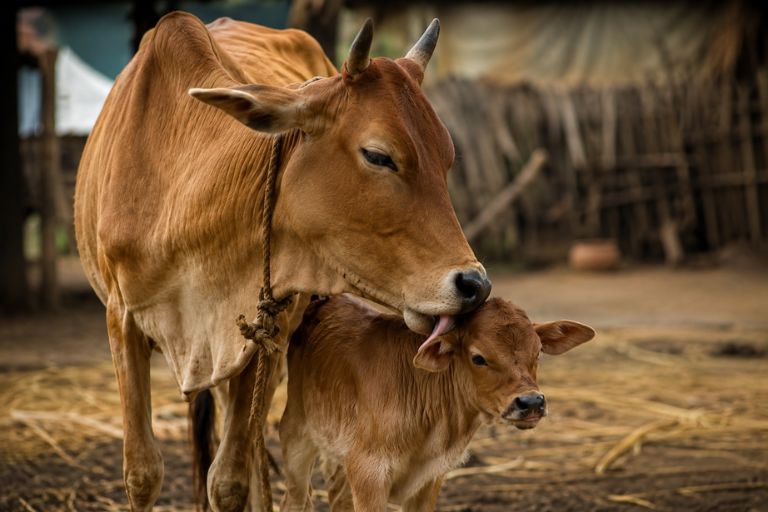
Our acharyas beautifully explain this through the meaning of the word, va:tsalya itself.
- Vatsa means calf.
- Va:tsa represents the birth impurities covering the newborn calf.
- La means to lick away or remove.
- Va:tsalya describes the overwhelming affection of the mother cow that compels her to lovingly remove those impurities herself because she cannot bear to see the calf in that condition.
If even a mother cow in God’s creation can show such profound affection for her calf, what does that tell us about the Creator Himself?
Va:tsalya is the Lord’s divine quality by which He cannot bear to see the faults of those who seek Him. Out of that boundless affection, He lovingly overlooks those faults and, through His grace, relieves them of the suffering caused by them. This is His divine quality of do:sa bho:gyathvam.
Yet this naturally raises another question.
If the Lord possesses infinitely greater compassion than any mother could ever have, why is there suffering, injustice, helplessness and cruelty in the world?
When life reaches its ‘lowest points’, some begin to question the very existence and nature of God, while others attribute suffering to karma. Some want to genuinely learn the reasons.
Our elders often say that karma and its workings are not ours to fully understand or unravel. We must carry on with our responsibilities.

More importantly, they encourage us to turn our attention to the higher power.
There is far too much happening within our bodies, among living beings, and throughout the world and the universe that is remarkably systematic. Such order points to something beyond our bodies, ourselves, the world, and the universe. That higher power is God.
Why does God allow suffering to continue?
The Lord’s natural way of protecting us is not by removing every hardship. What often appears to us as suffering is part of preparing us for our ultimate good. He gives us opportunities to exhaust the effects of our karma through the situations we encounter in life. In doing so, He gradually prepares us for a state of eternal bliss—a state where there is no more suffering, only blissful knowledge and servitude.
As part of this journey, we inevitably experience the consequences of our karma and participate in the natural order established by Him.
This naturally raises another question.
If God's love is immense, then why doesn't He make that journey gentler?
For the Lord to overlook our faults and bestow His grace, certain divine qualities must take precedence over others. Among His countless auspicious qualities are va:tsalya, His boundless, forgiving affection for His devotees, and swa:tantrya, His complete independence. The Lord possesses both in perfection. Yet, depending on how we approach Him, one may come to the forefront in His response to us.
This can be illustrated through a simple example.
Imagine a jar containing both water and oil. Although both are present together, one comes to the top depending on various factors. Likewise, the Lord possesses all His divine qualities in perfection at all times. Yet, depending on how we approach Him, one quality may come to the forefront in His response to us.

How can I approach Him so that va:tsalya is at the forefront?
There is One through whom our elders have taught us to approach the Lord, so that His va:tsalya comes to the forefront in His response to us, making our journey toward Him gentler.
This does not mean that the Lord cannot grant the same grace without that One’s recommendation. He certainly can. However, because He also possesses swa:tantrya and His other divine qualities in perfection, we cannot presume how He will choose to bestow His grace in any given situation.
Rather than speculate about what the Lord may or may not do, our elders have always advised us to follow the assured path – to seek the grace and recommendation of the One – our Universal Mother, Sri. Out of Her boundless compassion for all beings and Her eternal love for the Lord, she mediates for our sake. She guides us to cultivate humility and gratitude for Lord. Her recommendation brings His va:tsalya to the forefront in His response to us.
Lakshma means a sign or that which points us to something. Hence, mother Lakshmi is the One who shows us who the Lord is.
Sri: means the One who listens to us and makes the Lord listen to us.
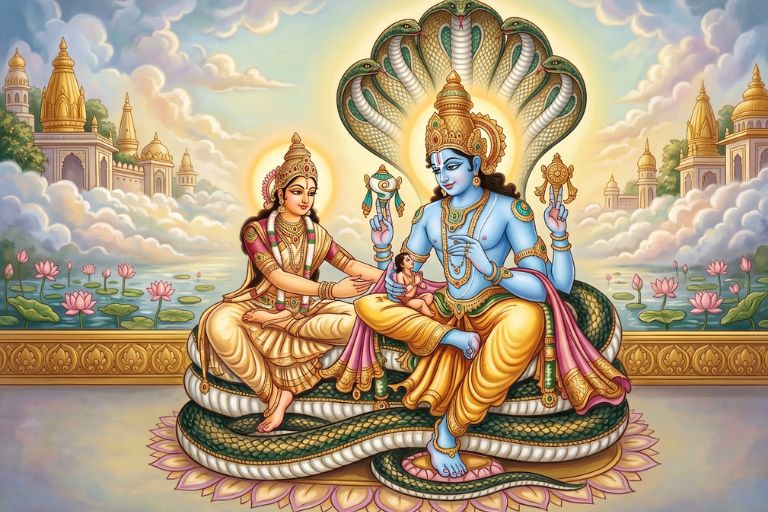
Where is the Universal Mother? How can I approach Her?
The universal mother is eternally inseparable from the Lord – not merely in physical presence, but in Their very nature.
Because of our ignorance of the proper way to realise this and approach the Divine Couple, we fail to benefit from their compassion. When the Lord descends in His vibhava (incarnation), archa: (deity), or antarya:mi (indwelling presence) forms, the Universal Mother also assumes a corresponding form to intercede on our behalf and bring forth His compassion toward us.
In the Rama avatar, She is Mother Sitha…
When the Lord resides as the archa: vigraha, the Universal Mother is also present with Him as archa: vigraha.
That is why our temples have a separate sanctum for the Universal Mother. Our tradition teaches us to first seek Her blessings before approaching the Lord. We then receive the darsan of the Divine Couple together, seeking Their grace.
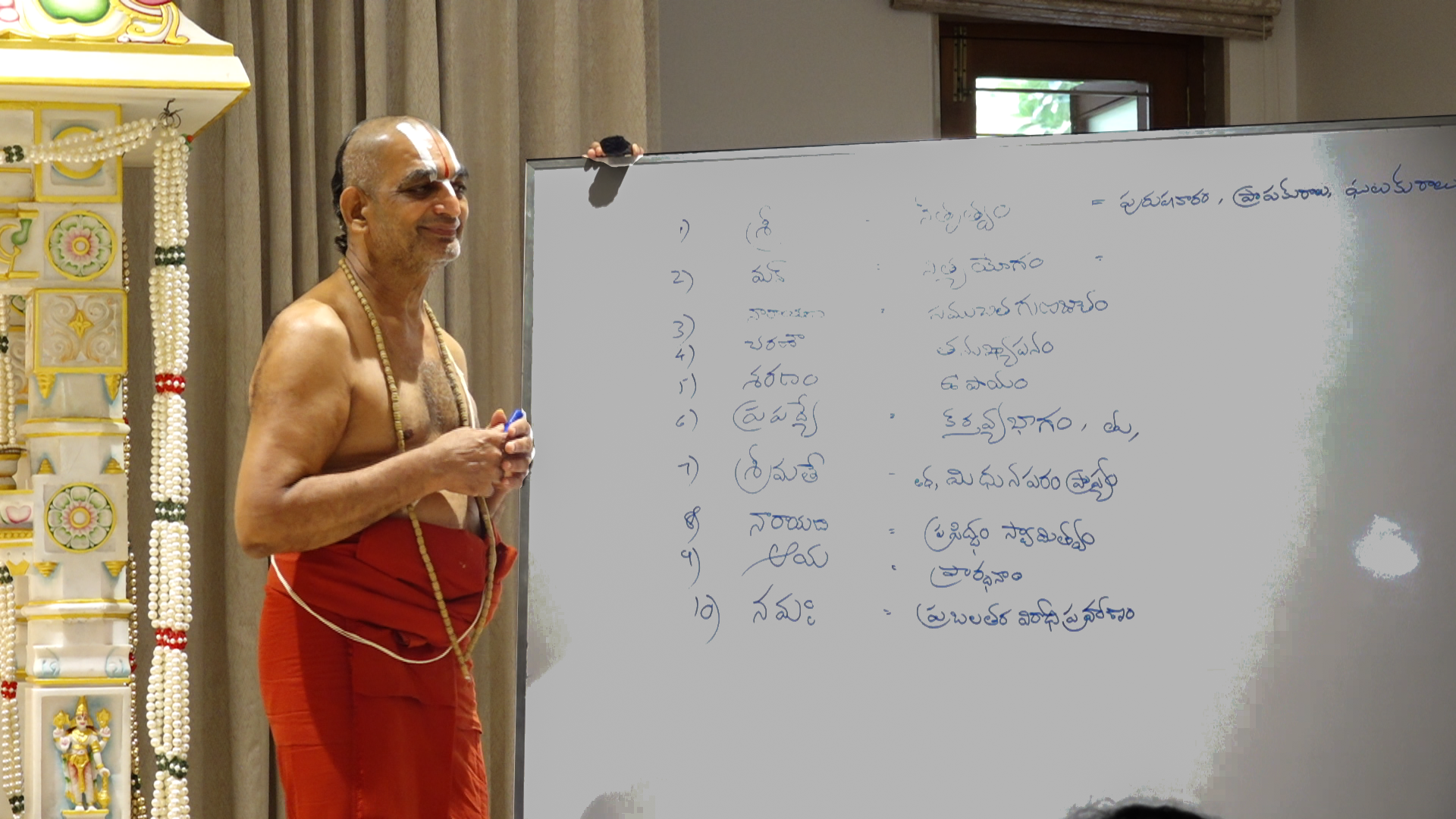
This is precisely what the Dwaya Mantra, the second of our three sacred mantras, teaches us.
Sri:manna:rayana charanow saranam prapadye:
Sri:mathe: na:ra:yana:ya namaha
The Answer to our Original Question Lies in the Path
At first, approaching the Lord through the Universal Mother may seem as though the Lord needs someone to persuade Him to show compassion. That is not the teaching. Rather, the Dwaya Mantra reveals the compassionate path that the Lord has given us to receive His grace.
That is the answer to the question, “Is God Forgiving or Fair”. He is both. And our elders have shown us the proper way to approach Him.
– From the teachings of HH Chinna Jeeyar Swamiji
– 6th August 2026, Mumukshuppadi Discourse
-Chathurmasya Deeksha, JIVA, Hyderabad