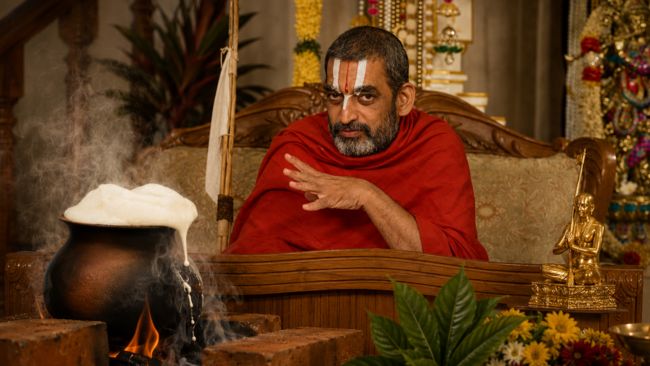

Yathindra Sapthathi – Matru Savanam
Matru Savanam: Seventy Women Honoured for Lives of Service
HH Sri Chinna Jeeyar Swamiji honours women in grassroots service, healthcare, agriculture, education, science and enterprise during His Saptathi celebrations
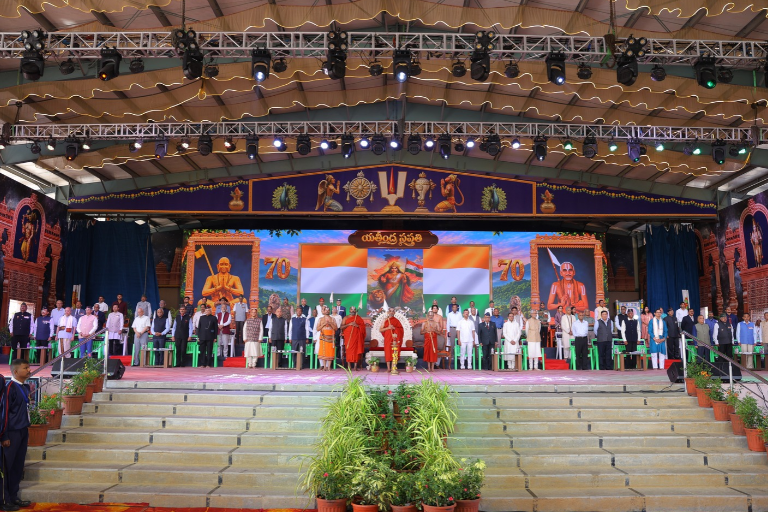
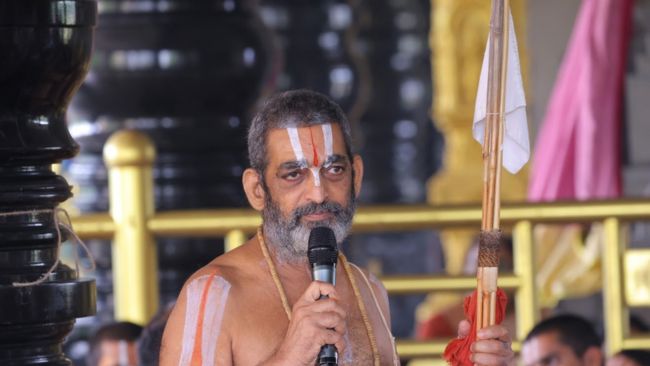
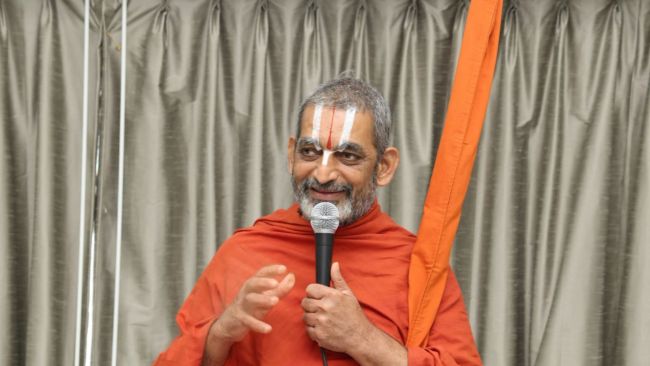
Seventy women were honoured at Matru Savanam, held at the Statue of Equality in Muchintal, Hyderabad, on November 11, 2026, during the celebrations marking the 70th birthday of HH Sri Chinna Jeeyar Swamiji. Their work ranges from caring for abandoned children and elders to supporting cancer patients, disability inclusion, rural development, natural farming, education, science and enterprise.
Matru Savanam celebrates motherhood in its widest sense: the compassion and sense of responsibility that women extend beyond their own families to society at large. Most of the honourees work in Telangana and Andhra Pradesh. Some lead research laboratories and companies. Many more have spent decades serving people in villages, hospitals, shelters and homes for the aged, often with very limited resources.
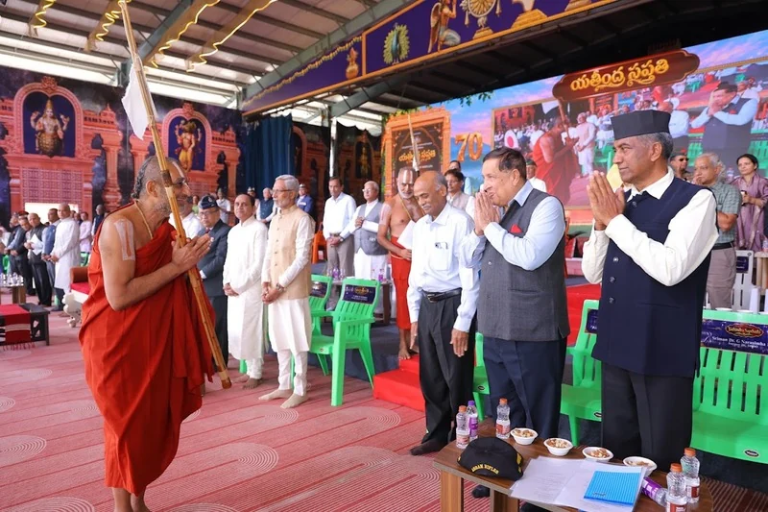
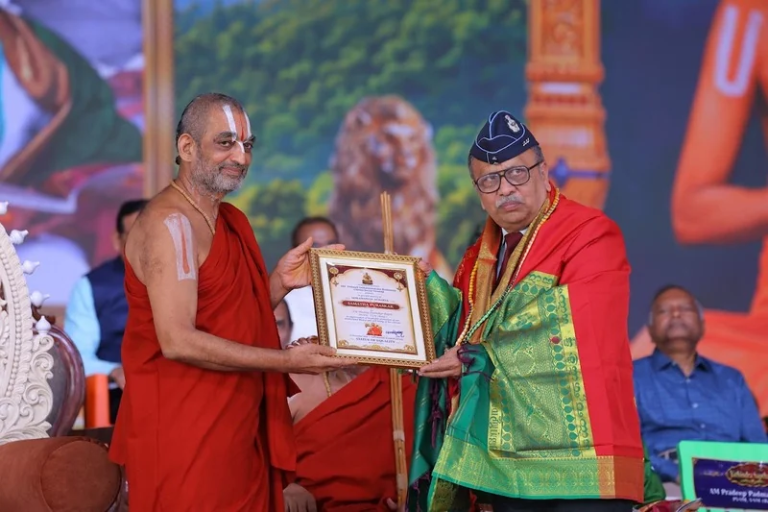
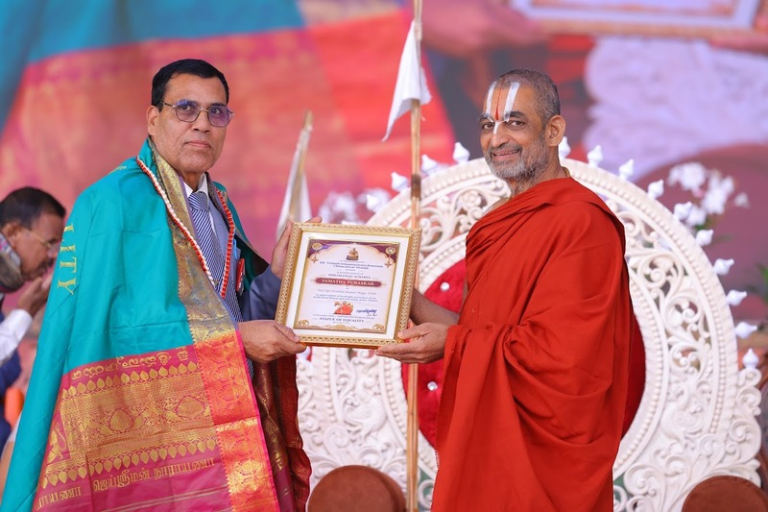
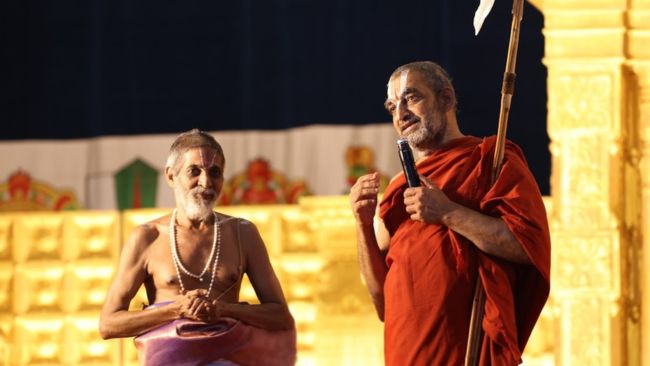
Sri Dhirendra Krishna Shastri Ji Maharaj of Bageshwar Dham and Sri Suresh ‘Bhaiyyaji’ Joshi joined Swamiji in presenting the honours. In his address, Sri Dhirendra Shastri Ji said he intends to organise a similar programme honouring women at Bageshwar Dham.
A Son’s Gratitude
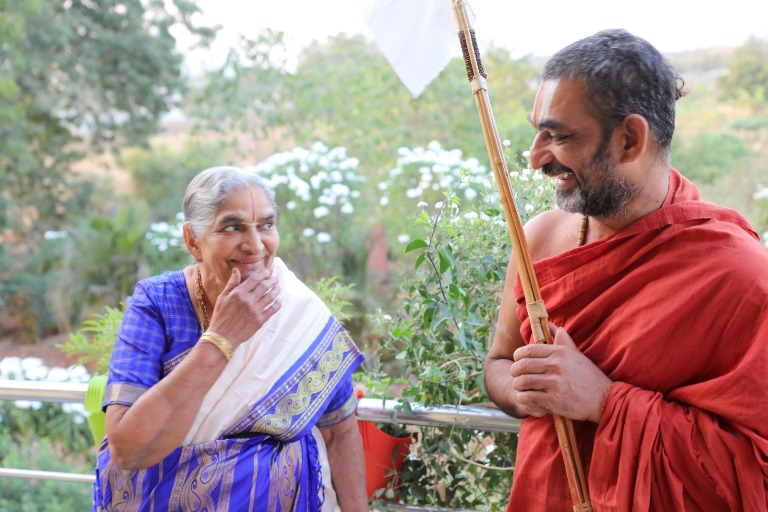
Matru Savanam is held in remembrance of the birth anniversary of Swamiji’s mother, Srimathi Alivelu Mangathayaru. This year’s ceremony, held during the Saptathi celebrations, honoured women whose service reflects the compassion she embodied.
Swamiji recalled that His Acharya, HH Sri Pedda Jeeyar Swamiji, once asked her whether her son might be prepared for a life of propagating Dharma. She replied that the elders could see the future, and whatever they decided would be accepted with reverence. From then on, whenever they met and in every letter she wrote, her message was the same: the Acharya’s teaching must reach the whole world. “This is your mission,” she would tell Him. “Live for that.”
Swamiji said Matru Savanam expresses His gratitude to her, offered by honouring women who serve society. It is not possible to honour every mother, He said, but one has to begin somewhere, just as one enters a river at some ghat.
The timing was also meaningful. Swamiji explained that the days following Deepavali bring to mind the return, in 1993, of the Archa Murthi of Sri Rama worshipped in His Acharya’s lineage. It had been taken from the asram and was restored a few days later. Before the annual abhishekam marking that return, Swamiji wished to offer something that would please Sri Rama, who held women in the highest regard.
To find the honourees, Swamiji asked Srimathi Sailaja Kiran, Managing Director of Margadarsi Chit Fund, to help identify women who had risen from ordinary circumstances to serve society. She replied, “Shall I look for gems in the soil?” Swamiji told the honourees that they were those gems. Srimathi Sailaja Kiran and her team compiled the details of the women honoured, and she was the first to receive the honour.
Swamiji’s Address: The Dignity of Women
Sri Rama and Mother Kaikeyi
Swamiji began with Kaikeyi, who is widely resented for sending Sri Rama to the forest. Rama Himself never felt that resentment.
Swamiji explained that the Ikshvaku claim to rule the earth was then largely nominal. Viradha, Khara and Dushana, Vali and Ravana held the lands beyond Ayodhya. Kaikeyi knew Rama was meant to be sovereign of the world, not king of a small kingdom, and she devised a plan to bring about His exile, knowing it would cost her her husband. Rama returned as sovereign of the world.
Rama understood this and defended Kaikeyi whenever anyone criticised her. When Vibhishana asked Him why He loved Bharata so deeply, Rama replied that it was because Bharata was Kaikeyi’s son. Swamiji noted that Kaikeyi played a more significant role in raising Rama than Kausalya did, and that Rama honoured both the mother who bore Him and the mother who raised Him. “All of you here,” He told the honourees, “are embodiments of such motherhood.”
Swamiji said that one of Bhagavad Ramanujacharya’s names describes Him as the one who raised the dignity of women. In His time, women were denied the right to hear or recite sacred mantras. Ramanujacharya declared this wrong. All beings are children of one God and one Mother, Bhudevi, He said, and the Lord who accepted Sabari’s hospitality could never show such partiality.
Ramanujacharya appointed 74 Simhasanadhipathis to carry the tradition forward, and He included women among them.
Swamiji added that women deserve not merely an equal seat but the foremost seat. He pointed out that the honourees had been given raised seats on the stage.
Swamiji also explained why the Statue of Equality is encircled by the 108 Divya Desams: together they illustrate the principles and experiences that shaped Bhagavad Ramanujacharya’s vision.
At Thirunaraiyur and Thiruvellarai, the Divine Mother takes precedence. The temple keys are kept with her and festivals are celebrated for Her. In processions She sets out first, and the Lord escorts Her back to her shrine before returning to His own. At Thiruputkuzhi, Sri Rama performed the last rites of Jatayu as a son would for a father. “In the eyes of God,” Swamiji said, “there is no distinction of male or female, human, animal or bird.”
Swamiji described the ceremony as a small, sincere gesture of respect. It was, He said, in no way a measure of the honourees’ service, dedication or commitment, but the Saptathi celebrations would not have been complete without honouring mothers
The seventy honourees come from different backgrounds, have faced different challenges and serve in different ways. Some hold doctorates and lead national institutions. Others left school early and work the land. Several have turned illness, disability or personal loss into work for others. What unites them is a commitment to improving lives beyond their own families.
Healthcare runs through many of their stories. Among the honourees is a woman who has coordinated cervical cancer screening camps and breast self-examination awareness programmes since 2007. Another is herself a cancer survivor who now provides patients and their families with meals, platelet support, medicines and accommodation. A mother whose son was born with thalassaemia built a society that now supports more than 2,000 affected families. Other honourees have arranged more than 3,000 free cataract surgeries and helped establish transparent organ donation systems in Telangana. One organ donation campaign spanning 15 states has enrolled more than 65,000 donors.
Many of the women care for people whom others have left behind. They run homes for orphaned children and for elders abandoned by their families, providing shelter, medical care and nutrition. One organisation has conducted more than 650 dignified funerals for abandoned persons. During the COVID-19 pandemic, the youngest honouree was sixteen when she helped perform last rites for victims whose own relatives could not come forward.
Disability inclusion is another strong thread. Honourees have built special education centres for children with intellectual and developmental disabilities. One of these was founded by a mother of two such children and began with just four students. Others work as sign-language interpreters in schools and government offices, or advocate for families affected by rare diseases while living with muscular dystrophy or polio themselves.
The protection of children and women has shaped the lives of others. One has spent more than three decades in rural Andhra Pradesh preventing thousands of child marriages and combating child labour. Another, who experienced the Jogini system herself, has made her struggle a lifelong mission. Others run free schools, learning centres and vocational training programmes for girls and women in underserved communities.
Among the awardees were natural farmers who cultivate millets, pulses, vegetables and fruits without chemicals, on holdings ranging from three acres to hundreds of acres. One farmer, who studied up to Class 9, preserves heirloom vegetable varieties that are disappearing from local markets. Another has spent 35 years restoring degraded land and planting about two million trees. Rural development leaders have organised farmer producer organisations so that women can earn independent livelihoods.
In research and education, the honourees include scientists who have developed iron- and zinc-rich millet varieties, identified more than 250 new bacterial species, and advanced the understanding of bacterial cell walls with implications for antibiotic development. An art historian among them contributed to the UNESCO World Heritage recognition of the Ramappa Temple. An educator’s method for foundational literacy and numeracy has reached more than 20,000 government schools.
Women entrepreneurs completed the picture. Their companies work in artificial intelligence, solar energy, aerospace communication systems and farm machinery. Others have built food and agricultural businesses where most employees are women, a mushroom production facility employing about 650 people, and training programmes that have opened careers for 2,500 women.
The inspiring journeys, achievements and contributions of all 70 honourees are documented in a commemorative booklet prepared for the occasion.
Introducing Sri Dhirendra Krishna Shastri Ji Maharaj, Swamiji spoke of his service at Bageshwar Dham, including free weddings held every year for couples who cannot afford them and meals served daily to thousands of visitors.
In his address, Sri Dhirendra Shastri Ji said that Bharatiya tradition calls the land, the Ganga and the nation itself “mother”, and places mothers ahead rather than merely alongside. “In a society where mothers are honoured,” he said, “men attain achievement.” He narrated an incident involving Hanuman bringing Sri Rama to meet his mother, Anjana, after the war in Lanka. He likened the honour Swamiji had given these women to the honour Hanuman gave Mother Sita and Mother Anjana.
He then announced his intention to hold a similar programme at Bageshwar Dham, seating the women of his region on its stage and honouring them, and invited Swamiji to attend.
Sri Suresh ‘Bhaiyyaji’ Joshi presented honours to several recipients. Other spiritual leaders and dignitaries also attended.
Students of Nethra Vidyalaya, a college for the visually challenged, opened and closed the programme with songs dedicated to mothers. Swamiji noted that the students study and take examinations on computers and have represented the country in sport.
Students of the Vedic Gurukulam, who study the Vedas alongside physical disciplines, presented a Mallakhamb display on pole, rope and hanging apparatus.
Swamiji blessed Srimathi Suma, who conducted the programme and introduced each honouree. He also appreciated Srimathi Srikumari Rameswara Rao, who coordinated the event and presented the awardees with their honours and pavitra malas. Swamiji also specially appreciated the work of the sign-language interpreter among the honourees and encouraged others to learn this valuable skill.
In conclusion, Swamiji told the honourees that the ashram would learn from each of them what support it could offer, and would work to encourage their service.
Earlier the same day, the Samatha Puraskars honoured 70 members of the armed forces, defence scientists and families of Veers who laid down their lives.
Together, these two ceremonies honoured different expressions of the same spirit of selfless service: the courage of those who defend the nation, the sacrifices of those who lay down their lives for it, and the compassion of the women who form its very heart, dedicating their lives to the welfare of others. Each embodies the guiding principle at the heart of Swamiji’s vision: “Serve All Beings as Service to God.”
– Yathindra Sapthathi,
– 70th Thirunakshatram Celebrations of HH Chinna Jeeyar Swamiji
– Muchintal, Hyderabad | November 11, 2026